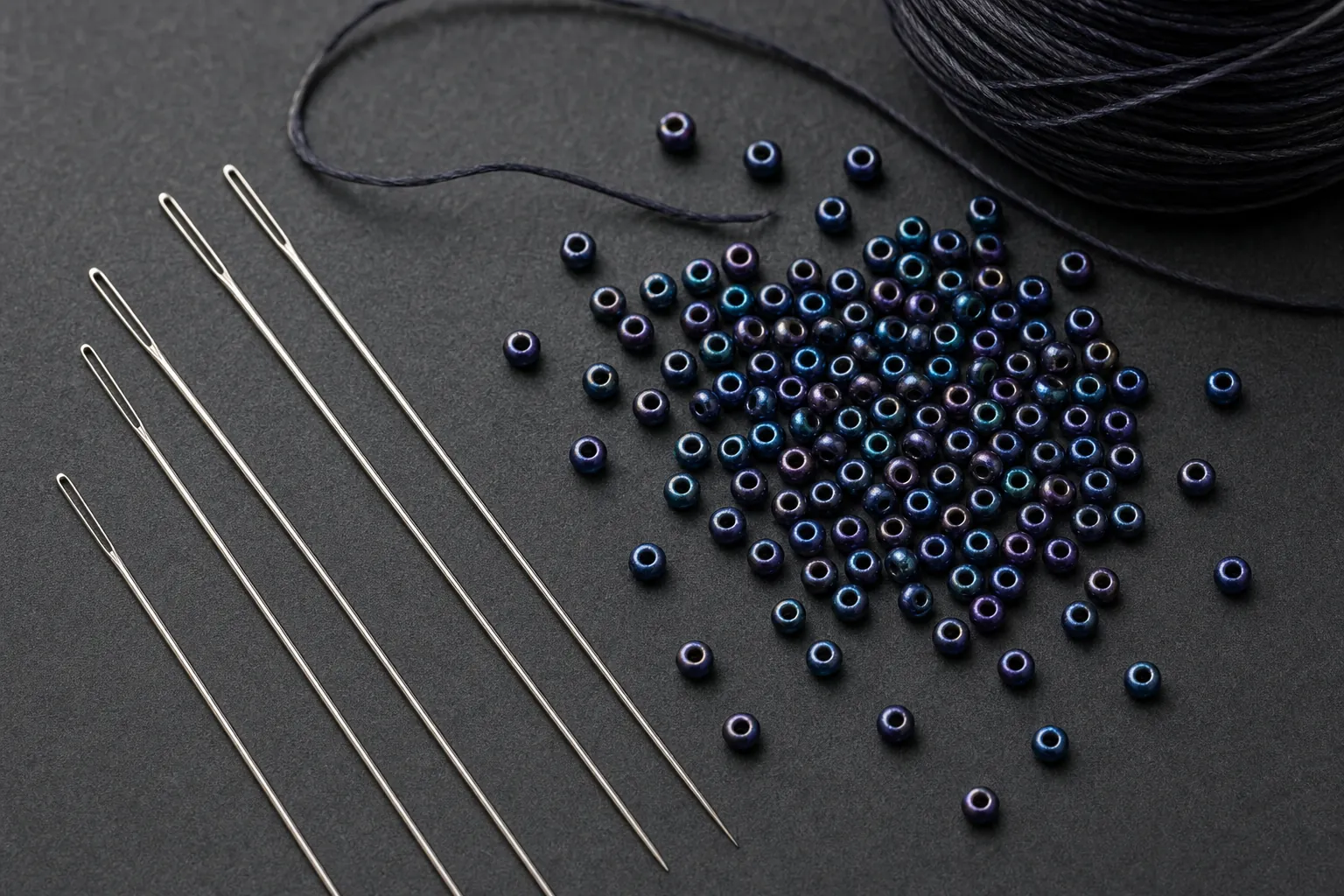
The right needle gives small beads, fine thread, and detailed patterns room to work together. Browse the current seed-bead needle selection on Etsy when you are ready to start.
Beading needles do quiet, important work. They carry thread through small bead holes, guide a pattern into place, and make it possible to return through a row when an edge needs strength or a thread tail needs to disappear. When a needle fits the beads and thread you are using, the work feels smoother from the first few stitches.
For seed-bead projects, the useful difference is usually in the overall slenderness of the needle. A fine shaft and small eye leave more room inside each bead, especially when the pattern asks you to pass through a bead again. That little bit of room matters in peyote stitch, brick stitch, fringed earrings, narrow woven bands, and any piece where the thread path becomes part of the structure.
Indigenous Vibe Beads carries John James seed-bead needles as part of the current collection. The live Etsy shop is the best place to see what is available now. Before you choose, think about the size of your beads, the thread you want to use, and whether the project will need repeat passes through the same rows.
A needle does not need to be dramatic to be useful. It simply needs to move through the beads without asking you to force the work. That leaves your attention where it belongs: on the color, tension, and rhythm of the piece you are making.
Match needle to bead
Leave enough room inside the bead.
Start with the smallest beads in the design, because they set the limit for the needle and thread. Size 11 seed beads are a practical example: a fine needle gives you a better chance of passing through a bead again without crowding the hole. If the needle catches before the thread has a chance to follow, or if every stitch needs a hard pull, the pairing is probably too tight. Moving down to a finer needle or lighter thread can make the same pattern feel much more manageable.
Match needle to thread
Thread should follow without fighting the eye.
A needle eye needs to hold the thread securely without turning the start of every pass into a struggle. Cut the thread on a clean angle, pinch the end flat, and slide it through without fraying it against the eye. Once threaded, pull a short length through and test it with a few beads before beginning the full piece. For a closer look at material pairings, visit the beading thread and tools guide before choosing the supplies for your next project.
Match needle to movement
Choose a length that gives your hands control.
A longer needle can be useful when you want to pick up several beads for a fringe or stringing sequence. A shorter needle can feel more direct for close repeats and small turns. Neither choice has to be permanent. The goal is to use a needle that lets you see the thread path, keep your grip relaxed, and move through the work without bending the needle against a stubborn bead. If you are learning a new stitch, a short practice strip is an easy way to find what feels natural.
Test before the full piece
Let a few stitches tell you whether the fit is right.
Before committing to a long bracelet or a pair of earrings, string a few beads and make several passes through the same small section. Notice how much pressure the needle needs, whether the thread begins to fray, and whether the beads settle neatly beside one another. A quick test gives you the chance to change the needle or thread while the adjustment is still simple.
It is also a useful way to check tension. If the thread pulls the beads into a tight curve, ease off slightly before the pattern gets longer. If the rows feel loose, give each stitch a gentle, even pull instead of yanking the needle at the end. A fine needle helps here because it is designed to move through close spaces without making the beadwork do extra work.
For a first woven sample, pair the needle with size 11 seed beads and two or three colors. The smaller format keeps the test focused on your stitch path and lets you see whether your materials feel good together.
Use the needle well
Small habits help a fine needle last longer.
Pull in the direction of the stitch
Guide the needle through the bead, then draw the thread through on the same path. Pulling sideways puts unnecessary pressure on a fine needle and can make it bend before it needs to.
Do not force a crowded pass
When a bead is already full of thread, forcing the needle through can split thread, distort the row, or bend the shaft. Step back and choose a different thread path when the space is too tight.
Keep more than one nearby
Needles are small, and a project can pause quickly when the only one disappears under the bead mat. Keeping a spare on hand lets you replace a bent needle without leaving the piece half-finished.
Protect the finished edge
When you are securing an edge or weaving in a tail, pass through beads with steady pressure. The goal is a clean finish that holds the thread in place without crushing the shape of the work.
Choose what supports the project
Good tools make room for the design to take over.
A beading needle is most useful when it matches the kind of work you want to make. For a detailed pattern, prioritize a fine needle and thread pairing that leaves room for repeat passes. For a fringe-heavy project, consider whether a little more length would make picking up a sequence easier. For a simple stringing project, test how the bead hole, thread, and needle move together before you commit to the whole color story.
Pay attention to the point where the work starts to feel difficult. If the needle will not pass through a bead, if the thread keeps wearing at the eye, or if every pull makes the rows tighten too much, the problem may be the material pairing rather than your technique. Changing one supply can give the pattern back its natural rhythm.
Indigenous Vibe Beads is built around the practical details that help makers keep going. Victoria White Eagle has helped people choose bead supplies since buying her Moab bead store in 2002. Browse the supply overview to see the wider collection, then visit Etsy for the current needle, thread, and bead availability.
Frequently asked questions
What needles are used for seed beads?
Seed-bead needles are fine, flexible needles made to pass through small bead holes with thread. They are a useful choice for bead weaving, stringing, and detailed jewelry where the needle may need to pass through the same bead more than once.
What size beading needle should I use for size 11 seed beads?
Choose a fine seed-bead needle that moves through the bead hole smoothly with your chosen thread. When the needle and thread fit comfortably together, you have more room for a second pass, edge reinforcement, and weaving in thread tails.
Why does my beading needle keep bending?
Fine beading needles are meant for close work, so some flexibility is normal. Repeatedly forcing a needle through a tight bead hole, pulling it at an angle, or using a thread that is too thick for the bead can make bending happen sooner.
Can I use a regular sewing needle for beadwork?
A regular sewing needle can work for larger beads, but its eye and shaft are often too wide for detailed seed-bead projects. A proper seed-bead needle keeps the whole tool narrow, which makes close weaving and repeat passes more comfortable.
Keep the project moving
Find the needle, thread, and beads for your next idea.